Investigative Storyteller in the Caribbean

Category: Southern Caribbean

US Ratchets Up Caribbean Presence

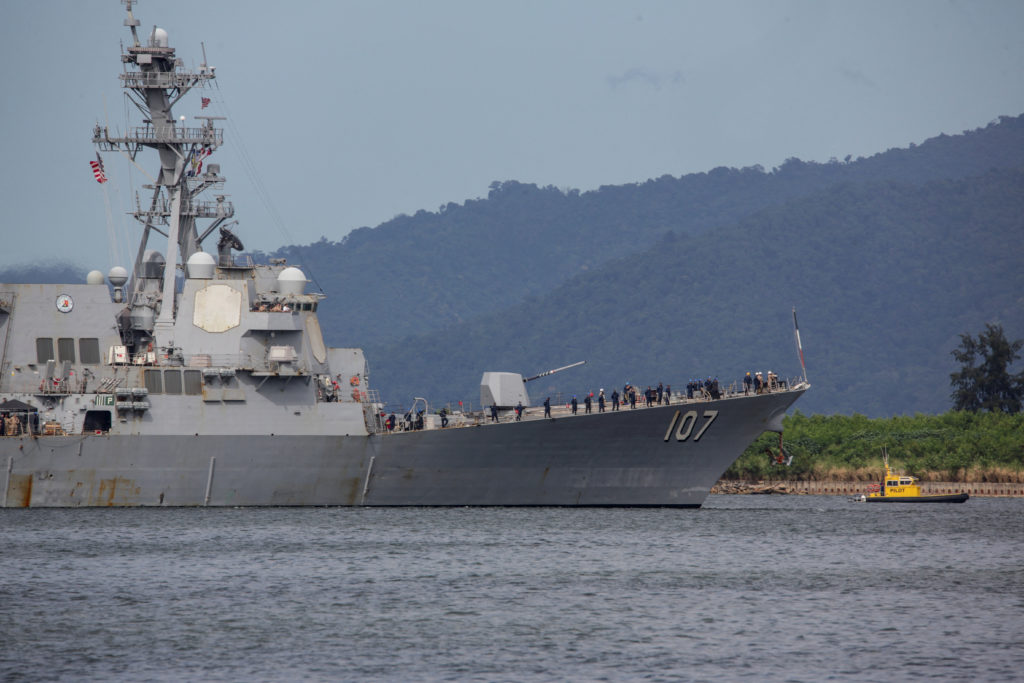
The U.S. Navy destroyer USS Gravely (DDG-107) approaches Port of Spain, Trinidad

As the US military saber rattling escalates against Venezuela, including closing the country’s airspace, the US is pushing Caribbean island-nations for greater security cooperation. Notably, US Department of Defense officials have been holding high level talks with Trinidad & Tobago and the Dominican Republic to provide access to military bases, ports and airports.

The American pitch is framed as a larger partnership strategy to counter narcotics trafficking through the Caribbean. But these anti-drug trafficking overtures cannot be separated from the prospect of forcing regime change in Venezuela. All of which is looking more like a grandiose US geopolitical game plan for the region with hazy the objectives.

It is plausible that drug traffickers might be changing their modus operandi by applying high tech methods to better conceal their boats and using different routes to reach the US. And this should compel a more aggressive US response. However, details of a more sophisticated drug trafficking threat have not been presented or openly discussed. If drug traffickers really are shifting their tactics and upping their game, then why is the response confined to blowing up open skiffs powered by outboard motors off the coast of Venezuela (along with boats off Central America on the Pacific side) ?

Are these skiffs just easy pickings to allow some visible “wins” (or cheap thrills) for the flotilla gathered in the Southern Caribbean? If so, it begs the question: Why can’t the biggest and most lethal armed force the world locate and intercept the dangerous boats supposedly sneaking their way north up the chain of islands? The capture of just one high-tech boat with crew intact (not stupidly blowing it up and killing everyone) could go a long way to show the serious threat of drug trafficking across Caribbean waters. And certainly more believable than blasting away small boats off the Venezuelan coast alleged to be carrying drugs but never proven.

Without more evidence of drug trafficking from boats, high-tech or otherwise, the over-arching justification for massive American military presence smacks of the “weapons of mass destruction” claim that propelled the US into Iraq almost a quarter century ago. The current US claims may well cause some island-nation leaders to wonder just what they are being asked to sign up for and the price. And what is the bigger American agenda?

Now, an expanded American engagement with the Caribbean could be a good thing and become a force-multiplier. Not just to help counter drug trafficking but also gun smuggling, human trafficking, and transnational crime generally throughout the region. American initiatives could also pave the way for more cooperation to beef up Caribbean armed forces to combat gangs, particularly in Haiti, but also on other islands. Enhanced collaboration could also be combined with investment incentives, trade barrier reductions, and disease eradication programs to further strengthen institutions and goodwill. A robust and symbiotic American presence comes with the added bonus of keeping adversaries like China, Russia and China at bay.

Instead, the current proposed partnership appears to be limited to using Caribbean islands for expanded American military presence. That raises suspicions among Caribbean people and their leaders, as they are all too familiar with American troops occupying island-nations and dictating terms since the early 1900s. Moreover, it invokes the long legacy of colonial rule that resides deep in the Caribbean heart.

Current negotiations with Caribbean governments might be limited to conducting US operations in national air space and territorial waters, as well as parking spots for planes, ships, and radars. Intelligence sharing is also likely part of the package. But all that will raise concerns about sovereignty and strings attached. It’s a delicate balancing act for the island-nations that lends itself to pragmatism. But greater confidence and assertiveness among Caribbean countries and a wariness about the costs vs benefits could temper US ambitions. If there is going to be amped up cooperation, Caribbean island-nations will want to bargain as equals, not junior associates.

Indeed, questions about American intentions regarding regional engagement may have become more concerning by the troubling revelations in the Washington Post on Nov 28, 2025. The article states that after the first skiff off Venezuela was hit with eleven people on board in September, two people miraculously survived. When the Command Center informed Secretary of Defense Pete Hegseth that two survivors were clinging to the smoldering wreck, he allegedly gave the order to “kill them all.” The order from the top was apparently conveyed down the chain of command through Admiral Frank Mitchell Bradley, and the last two were blown up as well.

There is no justification for killing people on a boat, even a suspected drug boat, that does not pose a threat. Killing survivors struggling in the water is even more heinous and clearly a war-crime by any US or international legal standard (spelled out in the Geneva Convention) and possibly murder. That heinous act, if proven true, thus presents another dilemma for Caribbean leaders: Do they want to align themselves with a US leadership that so callously disregards human life> Especially when the only ones killed are on the lowest rung on the drug trafficking ladder, the desperate ones trying to make a few hundred dollars for driving a boat?

The Trump administration’s bellicosity and lawlessness today may well cause some Caribbean countries to back away from American cooperation, even with the US dangling partnership enticements. That erosion of trust and unravelling of American goodwill could turn parts of the Caribbean against the US and leave the region more fractured, impoverished, and unstable.

On a personal note, as a longtime Caribbean observer and resident, it deeply pains me to see my country spiraling downward and erasing the qualities that once defined it as a force for good in the world, however imperfect. That said, I am confident that Trump’s pigheaded and toxic approach to the Caribbean, and just about everything else this administration touches, will change. Stay tuned for a post-Trump era for the region could look like.

Southern Caribbean–What Next?

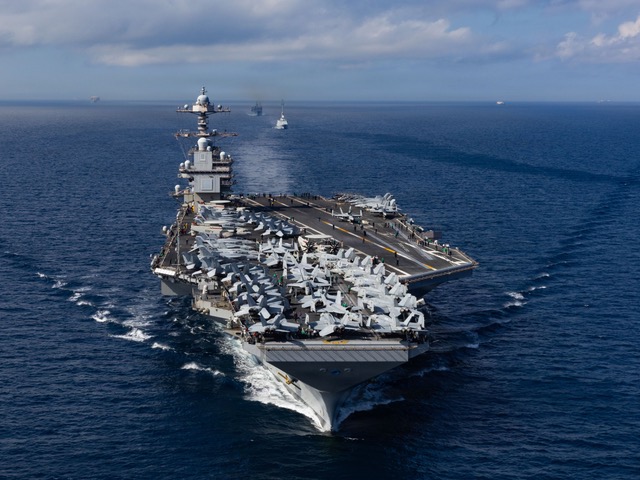
USS Gerald R. Ford

Time to draw upon my years in Department of Defense and weigh in on the massive US military buildup in the Caribbean and potential conflict with Venezuela.

First, let’s dispense with the “stopping the flow of drugs into the US” the “narcoterrorism” labels as justification. The drug flow from Venezuela into the US is relatively minimal compared to Mexico and Colombia. And blowing up small skiffs that may or may not have drugs and killing everyone smacks of extra-judicial killings and likely a warcrime. And that in turn puts US military personnel in grim quandary about what exactly they should or should not be doing.

Moreover, drone attacks that kill those on board is plain stupid and counterproductive. That’s because those on board could have been taken into custody and interrogated. From them the US could learn the modus operandi, production locations, transport hubs, and drug lords directing the enterprise. It’s called basic intelligence collection and could yield a great deal of information that would actually matter in the war on drugs–if that was the aim. And, by the way, the drugs could be seized and shown off to the world as evidence. But none of that is happening.

So what else is going on? Tragically, it’s more about hubris–the notion that the US can force regime change with military might, settle scores, and show them who’s boss. Most of the time, that does not work out well, especially when it comes to bigger countries. Think Vietnam, Iraq, Afghanistan. Venezuela is a large country with high mountains, dense jungles, and around 30 million people, most of them hungry and hurting. The risks of failure are huge. In the past half century, the US has tended to win the battles, but lose the wars in the big countries. That’s mainly because American people don’t like the massive price tag in blood and treasure that comes later for wars that marginally matter to US security. Moreover, the powers in charge of winning–flag officers and senior intelligence officers–have displayed little interest in grasping the complex cultural, historical, political, and sociological elements that define a country and what the US is up against.

(Caveat: Elite US Special Forces and a few intelligence officers do immerse themselves in the country the US attacks or intervenes. They take the time to learn what’s happening on the ground and how it fits into the larger picture. But their often insightful observations are seldom acted upon.)

Now, this is not to say that Americans are wrong to want to depose despots who torture and kill opponents while aligning themselves with other oppressive despots. No democratic, law-abiding country should turn a blind eye to governments who commit atrocities. Venezuela’s “President” Nicolás Maduro falls into this category. He blatantly stole the 2024 presidential election and forced the opposition to flee or go into hiding. Notably, his popular opponent Marina Corina Machado won the 2025 Nobel Peace Prize for her courage. Maduro and his henchmen’s crimes against humanity, including torture and disappearances, are the worst in the Americas. Shed no tears if he gets ousted.

The problem is that American motives in this case are not rooted in liberation and human rights but rather an ill-advised power play to assert greater dominance in the region by force. By ramping up lethal forces in the Southern Caribbean, the US has placed itself in a no-win situation that will not end well. Trump has invested too much in this misadventure to back down now. Especially after designating Maduro and his government allies as members of the so-called foreign terrorist organization Cartel de los Soles (Cartel of the Suns). More than a dozen warships, including the world’s largest aircraft carrier, the USS Gerald R. Ford, with 70 fighter jets and 2200 Marines on board, have been deployed. Most are hovering off the coast of Venezuela. In addition, numerous bombers and surveillance aircraft have been moved to the region and are flying patrols along Venezuela’s territorial waters.

This sets up a stand-off with one of two possible outcomes: Maduro steps down–an unlikely scenario–or the US strikes at targets in Venezuela. Trump is not going to leave without some kind of “win” to brag about. The unknown is what targets the US will hit. The US could bomb a few Venezuelan military bases and maybe some drug production facilities hidden in the jungle, declare victory, and go home. But Maduro could also declare victory, claiming the Americans dared not do more. And he would still be in power.

That raises the specter of going after Maduro himself and “finishing the job.” That possible scenario would trigger a free-for-all in Venezuela that would almost certainly plunge the country into a calamitous conflict. Perhaps an all-out civil war with various factions vying for power, including ambitious generals. The opposition movement to Maduro would come out of hiding and claim its mantle as the legitimate rulers, perhaps in alliance with one of the military factions.

And then there are the criminal gangs, some affiliated with the military, who would simply move in and stake out their territory. In fact, I would lay bets on ruthless gangs coming out on top since they already have powerful weapons, a stream of cash, and an established infrastructure. Once ensconced, they will be hard to dislodge and turn the fragile country into a series of warring criminal fiefdoms. Venezuela will be a state in name only.

Of course, a Venezuela thrown into chaos would not just strengthen the hold of drug trafficking gangs, but lead to widespread famine, disease, and violence that could also trigger another wave of fleeing refugees. Moreover, Venezuela’s crisis could spill over into other Caribbean countries, many of them already fragile and vulnerable, with unknown consequences. America has built up goodwill and soft power over decades of cooperation in the Caribbean. This includes cooperation with the US Coast Guard to counter narcotics and human trafficking, as well as substantial disaster assistance among other initiatives. Also, Miami is widely seen as a commercial and, to some extent, a cultural capital of the Americas where ideas and people can mix and thrive freely. But a US strike against Venezuela–with videos of civilian carnage–could well spark sympathy and solidarity with a besieged Venezuela and foment anti-American sentiment. The instability generated in Venezuela and Caribbean islands would almost certainly embolden US adversaries to go from a toe-hold to a foot-hold in the region.

In short, Trump’s US military incursion will create exactly the opposite of its intended effect by weakening US national security and leaving a lasting legacy of anguish and suffering that Americans will all pay for–heavily, again. As I write this, news outlets report on possible talks between Trump and Maduro and speculation on a diplomatic solution. I’m skeptical, but here’s one scenario: Maduro promises to stop narcotics trafficking from Venezuela that Trump can call a win, however meager. Given Trump’s susceptibility to flattery, inclination to switch positions, and suddenly cave after tough talk, Maduro has chance to call off the dogs and remain a tyrant.

Stay tuned for next posting: Envisioning a post-Trump Caribbean region that rethinks everything.

© 2025 Ben Stubenberg

Theme by Anders NorenUp ↑