Investigative Storyteller in the Caribbean

Author: Ben Stubenberg (Page 1 of 3)

Ben Stubenberg is a writer and story teller based in the Turks & Caicos Islands. He has written numerous articles about historical and current events from the Caribbean region. Most recently he has written a book about the untold story of the original Jamaican bobsled team soon to be published.

US Ratchets Up Caribbean Presence

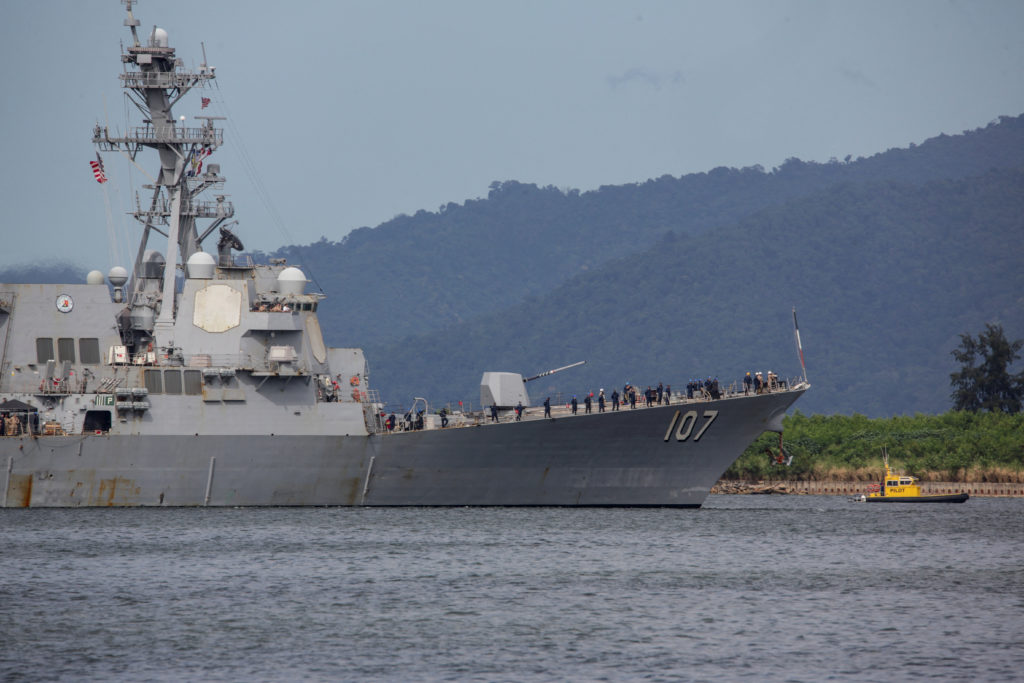
The U.S. Navy destroyer USS Gravely (DDG-107) approaches Port of Spain, Trinidad

As the US military saber rattling escalates against Venezuela, including closing the country’s airspace, the US is pushing Caribbean island-nations for greater security cooperation. Notably, US Department of Defense officials have been holding high level talks with Trinidad & Tobago and the Dominican Republic to provide access to military bases, ports and airports.

The American pitch is framed as a larger partnership strategy to counter narcotics trafficking through the Caribbean. But these anti-drug trafficking overtures cannot be separated from the prospect of forcing regime change in Venezuela. All of which is looking more like a grandiose US geopolitical game plan for the region with hazy the objectives.

It is plausible that drug traffickers might be changing their modus operandi by applying high tech methods to better conceal their boats and using different routes to reach the US. And this should compel a more aggressive US response. However, details of a more sophisticated drug trafficking threat have not been presented or openly discussed. If drug traffickers really are shifting their tactics and upping their game, then why is the response confined to blowing up open skiffs powered by outboard motors off the coast of Venezuela (along with boats off Central America on the Pacific side) ?

Are these skiffs just easy pickings to allow some visible “wins” (or cheap thrills) for the flotilla gathered in the Southern Caribbean? If so, it begs the question: Why can’t the biggest and most lethal armed force the world locate and intercept the dangerous boats supposedly sneaking their way north up the chain of islands? The capture of just one high-tech boat with crew intact (not stupidly blowing it up and killing everyone) could go a long way to show the serious threat of drug trafficking across Caribbean waters. And certainly more believable than blasting away small boats off the Venezuelan coast alleged to be carrying drugs but never proven.

Without more evidence of drug trafficking from boats, high-tech or otherwise, the over-arching justification for massive American military presence smacks of the “weapons of mass destruction” claim that propelled the US into Iraq almost a quarter century ago. The current US claims may well cause some island-nation leaders to wonder just what they are being asked to sign up for and the price. And what is the bigger American agenda?

Now, an expanded American engagement with the Caribbean could be a good thing and become a force-multiplier. Not just to help counter drug trafficking but also gun smuggling, human trafficking, and transnational crime generally throughout the region. American initiatives could also pave the way for more cooperation to beef up Caribbean armed forces to combat gangs, particularly in Haiti, but also on other islands. Enhanced collaboration could also be combined with investment incentives, trade barrier reductions, and disease eradication programs to further strengthen institutions and goodwill. A robust and symbiotic American presence comes with the added bonus of keeping adversaries like China, Russia and China at bay.

Instead, the current proposed partnership appears to be limited to using Caribbean islands for expanded American military presence. That raises suspicions among Caribbean people and their leaders, as they are all too familiar with American troops occupying island-nations and dictating terms since the early 1900s. Moreover, it invokes the long legacy of colonial rule that resides deep in the Caribbean heart.

Current negotiations with Caribbean governments might be limited to conducting US operations in national air space and territorial waters, as well as parking spots for planes, ships, and radars. Intelligence sharing is also likely part of the package. But all that will raise concerns about sovereignty and strings attached. It’s a delicate balancing act for the island-nations that lends itself to pragmatism. But greater confidence and assertiveness among Caribbean countries and a wariness about the costs vs benefits could temper US ambitions. If there is going to be amped up cooperation, Caribbean island-nations will want to bargain as equals, not junior associates.

Indeed, questions about American intentions regarding regional engagement may have become more concerning by the troubling revelations in the Washington Post on Nov 28, 2025. The article states that after the first skiff off Venezuela was hit with eleven people on board in September, two people miraculously survived. When the Command Center informed Secretary of Defense Pete Hegseth that two survivors were clinging to the smoldering wreck, he allegedly gave the order to “kill them all.” The order from the top was apparently conveyed down the chain of command through Admiral Frank Mitchell Bradley, and the last two were blown up as well.

There is no justification for killing people on a boat, even a suspected drug boat, that does not pose a threat. Killing survivors struggling in the water is even more heinous and clearly a war-crime by any US or international legal standard (spelled out in the Geneva Convention) and possibly murder. That heinous act, if proven true, thus presents another dilemma for Caribbean leaders: Do they want to align themselves with a US leadership that so callously disregards human life> Especially when the only ones killed are on the lowest rung on the drug trafficking ladder, the desperate ones trying to make a few hundred dollars for driving a boat?

The Trump administration’s bellicosity and lawlessness today may well cause some Caribbean countries to back away from American cooperation, even with the US dangling partnership enticements. That erosion of trust and unravelling of American goodwill could turn parts of the Caribbean against the US and leave the region more fractured, impoverished, and unstable.

On a personal note, as a longtime Caribbean observer and resident, it deeply pains me to see my country spiraling downward and erasing the qualities that once defined it as a force for good in the world, however imperfect. That said, I am confident that Trump’s pigheaded and toxic approach to the Caribbean, and just about everything else this administration touches, will change. Stay tuned for a post-Trump era for the region could look like.

Southern Caribbean–What Next?

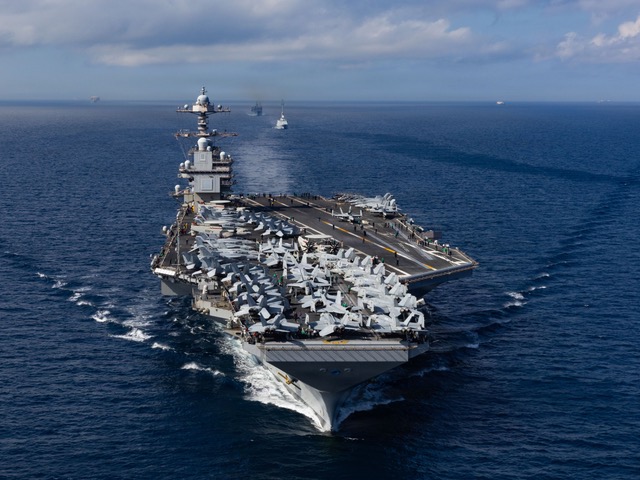
USS Gerald R. Ford

Time to draw upon my years in Department of Defense and weigh in on the massive US military buildup in the Caribbean and potential conflict with Venezuela.

First, let’s dispense with the “stopping the flow of drugs into the US” the “narcoterrorism” labels as justification. The drug flow from Venezuela into the US is relatively minimal compared to Mexico and Colombia. And blowing up small skiffs that may or may not have drugs and killing everyone smacks of extra-judicial killings and likely a warcrime. And that in turn puts US military personnel in grim quandary about what exactly they should or should not be doing.

Moreover, drone attacks that kill those on board is plain stupid and counterproductive. That’s because those on board could have been taken into custody and interrogated. From them the US could learn the modus operandi, production locations, transport hubs, and drug lords directing the enterprise. It’s called basic intelligence collection and could yield a great deal of information that would actually matter in the war on drugs–if that was the aim. And, by the way, the drugs could be seized and shown off to the world as evidence. But none of that is happening.

So what else is going on? Tragically, it’s more about hubris–the notion that the US can force regime change with military might, settle scores, and show them who’s boss. Most of the time, that does not work out well, especially when it comes to bigger countries. Think Vietnam, Iraq, Afghanistan. Venezuela is a large country with high mountains, dense jungles, and around 30 million people, most of them hungry and hurting. The risks of failure are huge. In the past half century, the US has tended to win the battles, but lose the wars in the big countries. That’s mainly because American people don’t like the massive price tag in blood and treasure that comes later for wars that marginally matter to US security. Moreover, the powers in charge of winning–flag officers and senior intelligence officers–have displayed little interest in grasping the complex cultural, historical, political, and sociological elements that define a country and what the US is up against.

(Caveat: Elite US Special Forces and a few intelligence officers do immerse themselves in the country the US attacks or intervenes. They take the time to learn what’s happening on the ground and how it fits into the larger picture. But their often insightful observations are seldom acted upon.)

Now, this is not to say that Americans are wrong to want to depose despots who torture and kill opponents while aligning themselves with other oppressive despots. No democratic, law-abiding country should turn a blind eye to governments who commit atrocities. Venezuela’s “President” Nicolás Maduro falls into this category. He blatantly stole the 2024 presidential election and forced the opposition to flee or go into hiding. Notably, his popular opponent Marina Corina Machado won the 2025 Nobel Peace Prize for her courage. Maduro and his henchmen’s crimes against humanity, including torture and disappearances, are the worst in the Americas. Shed no tears if he gets ousted.

The problem is that American motives in this case are not rooted in liberation and human rights but rather an ill-advised power play to assert greater dominance in the region by force. By ramping up lethal forces in the Southern Caribbean, the US has placed itself in a no-win situation that will not end well. Trump has invested too much in this misadventure to back down now. Especially after designating Maduro and his government allies as members of the so-called foreign terrorist organization Cartel de los Soles (Cartel of the Suns). More than a dozen warships, including the world’s largest aircraft carrier, the USS Gerald R. Ford, with 70 fighter jets and 2200 Marines on board, have been deployed. Most are hovering off the coast of Venezuela. In addition, numerous bombers and surveillance aircraft have been moved to the region and are flying patrols along Venezuela’s territorial waters.

This sets up a stand-off with one of two possible outcomes: Maduro steps down–an unlikely scenario–or the US strikes at targets in Venezuela. Trump is not going to leave without some kind of “win” to brag about. The unknown is what targets the US will hit. The US could bomb a few Venezuelan military bases and maybe some drug production facilities hidden in the jungle, declare victory, and go home. But Maduro could also declare victory, claiming the Americans dared not do more. And he would still be in power.

That raises the specter of going after Maduro himself and “finishing the job.” That possible scenario would trigger a free-for-all in Venezuela that would almost certainly plunge the country into a calamitous conflict. Perhaps an all-out civil war with various factions vying for power, including ambitious generals. The opposition movement to Maduro would come out of hiding and claim its mantle as the legitimate rulers, perhaps in alliance with one of the military factions.

And then there are the criminal gangs, some affiliated with the military, who would simply move in and stake out their territory. In fact, I would lay bets on ruthless gangs coming out on top since they already have powerful weapons, a stream of cash, and an established infrastructure. Once ensconced, they will be hard to dislodge and turn the fragile country into a series of warring criminal fiefdoms. Venezuela will be a state in name only.

Of course, a Venezuela thrown into chaos would not just strengthen the hold of drug trafficking gangs, but lead to widespread famine, disease, and violence that could also trigger another wave of fleeing refugees. Moreover, Venezuela’s crisis could spill over into other Caribbean countries, many of them already fragile and vulnerable, with unknown consequences. America has built up goodwill and soft power over decades of cooperation in the Caribbean. This includes cooperation with the US Coast Guard to counter narcotics and human trafficking, as well as substantial disaster assistance among other initiatives. Also, Miami is widely seen as a commercial and, to some extent, a cultural capital of the Americas where ideas and people can mix and thrive freely. But a US strike against Venezuela–with videos of civilian carnage–could well spark sympathy and solidarity with a besieged Venezuela and foment anti-American sentiment. The instability generated in Venezuela and Caribbean islands would almost certainly embolden US adversaries to go from a toe-hold to a foot-hold in the region.

In short, Trump’s US military incursion will create exactly the opposite of its intended effect by weakening US national security and leaving a lasting legacy of anguish and suffering that Americans will all pay for–heavily, again. As I write this, news outlets report on possible talks between Trump and Maduro and speculation on a diplomatic solution. I’m skeptical, but here’s one scenario: Maduro promises to stop narcotics trafficking from Venezuela that Trump can call a win, however meager. Given Trump’s susceptibility to flattery, inclination to switch positions, and suddenly cave after tough talk, Maduro has chance to call off the dogs and remain a tyrant.

Stay tuned for next posting: Envisioning a post-Trump Caribbean region that rethinks everything.

The Dire Plight of Stateless Children in Turks & Caicos

By Ben Stubenberg

As published in The Turks & Caicos Sun E-paper July 11 and 18, 2025

Who are they?

They live among us in the shadows and in plain sight. We might see them holding their mother’s hand while waiting along the highway for a jitney ride. Or shooting baskets at the court. Or walking from church in their Sunday best. They don’t seem any different than most other children living here, except for one thing: They have no identity. These are the stateless boys and girls of the Turks & Caicos who float through the perilous underbelly of our society, vulnerable and without hope. 

Almost all of the stateless children were born in TCI, grew up here, and may or may not have attended school. Some may have only a birth certificate, but many have no documents at all. And so, officially, do not exist. This means that as they mature into teenagers, they cannot work or get a driver’s license or enroll in national health insurance. They cannot open a bank account or be issued a passport to travel. 

These children likely number in the thousands. A US Department of Labor study published in 2014 estimated that TCI had around 2000 stateless children. In 2025, we can only surmise there are more. 

Their misfortune is not some faraway problem. In fact, they live little more than a stone’s throw from upscale resorts and our own homes. Just follow the dirt trail that turns off from the highway and disappears into the brush and you’ll come upon their homes—a patchwork of ramshackle hovels on the fringes of a settlement. Usually their abodes have no running water or electricity, but each hidden hamlet might have its own informal mayor, sheriff, stores, bars, lookouts, and “dealers” who act as powerbrokers for the powerless. 

Cut off from all opportunity, the stateless, like the thousands of undocumented migrants in TCI, struggle to survive—always fearful that they too will be discovered, that someone will rat them out. And that makes them prime targets for recruitment into local gangs who will give them things society does not—money, food, shelter, a sense of belonging. And maybe a gun. 

This should not be happening. The stateless have rights, including the right to nationality of the country where they were born when they have no other. Leaving them without nationality, and the protections that status affords, runs counter to all international and domestic law. Their plight may ultimately compel the courts to step in and give them the status they are entitled to. Meanwhile, it’s time to shine a bright light on what’s going on and what can be done.

How it begins 

In nearby countries wracked by extreme poverty or gang violence or both, the word has long been out that a better life awaits in the TCI with its swanky hotels, well-off tourists, and dollars to be made. The great majority who set their sights on TCI live in Haiti, just 100 or so miles (160 km) due south. 

They are driven by dreams and desperation, even with overwhelming odds stacked against them. But if they can make it to these shores, the hope is to land a job that earns them enough money to survive and send what’s left to relatives in need back home.

To embark on the journey to TCI from Haiti, each passenger will pay human traffickers $2000 to $3000 upfront. The price depends on whether the boat has a motor or just a sail. Few Haitians in Haiti can afford that kind of money, so they rely on friends and relatives abroad to wire the funds through a financial services company. 

On the designated night, the daring voyagers, mostly men but some women, and even toddlers, gather nervously at a remote beach or small village along Haiti’s north coast. Many will be carrying with them a grigris, a Voudou talisman to protect them. As added insurance, a Voudou priest performs a ceremony praying for a safe voyage. 100 or 200 people then say farewell and pack into a sloop less than 30 ft long. 

Traffickers might have made all kinds of promises about safely reaching TCI, but everyone on board is keenly aware they may not see tomorrow. Crossing the open ocean on a boat with gunwales barely two feet above the water line is fraught with peril. Sometimes the boat capsizes, drowning everyone. Sometimes the boat is spotted by drones or coastal radar and intercepted by TCI Marine Police off the coast. But sometimes the migrants are lucky enough to evade surveillance, steer through shallow coral reefs, and land on a beach on Provo before sunrise. 

When their feet touch the sand, they scramble into the bush to hide. If the migrant has made this trip before, deported, and returned for a second or third time, they may be able to call someone to pick them up. But more often the migrants run out of food and water and furtively emerge along the road listening for someone who speaks Kreyòl so they can ask for help. The local Haitians already here will usually spot them first by their ragged condition and give them a ride to the shrouded migrant communities in Dock Yard, Five Cays, or Blue Hills.

The new “home” for the migrants might be a tiny room they share with others Or it might be a camp in the bush where they sleep under a tarp. From there they meet the dealers who can find them work on the down-low. Gardening, housework, bartending, or construction. Anything. But it’s never that simple. 

The dealer may demand a cut of what the migrant makes and the employer may pay far less than the minimum wage because who is going to complain? And that subjects the migrants to exploitation, abuse, and the threat of being revealed to law enforcement. In those circumstances, women are especially defenseless. Some women might find a partner to look after them. Some band together for protection and share what little money they earn or food left behind by tourists. Others might be forced provide sex to remain hidden. Unaware of their rights, none apply for asylum. 

When the women become pregnant, a new set of trials confronts them starting with the lack of access to medical services. A few good doctors, midwives, and nurses on TCI volunteer to provide some pre-natal care without charge. But mostly the women are on their own to struggle as the pregnancy advances. When they go into labor, a stark choice confronts them: Give birth on the dirty floor of a squalid bush “clinic” hidden deep in the shantytown. Or take a chance, come out from hiding, and check into the hospital. 

The Birth Certificate Hurdle

The hospital is mandated to take in and treat anyone who has an emergency, including women about to give birth, regardless of financial condition. And they do. But the undocumented migrant woman dropped off at the emergency entrance by a jitney after her water has broken never has health insurance. So, after the birth, but prior to discharge, the hospital presents the new mother with a bill for hundreds if not thousands of dollars. Of course, she cannot pay, but the debt remains outstanding. 

The hospital issues the new mother an “It’s a boy” or “It’s a girl” birth confirmation card. The mother must present that card to apply for a birth certificate through the TCI Registrar’s Office. But she must also provide other documents, including—crucially—a passport, though other forms of government ID are often accepted. 

Few of the mothers who arrived in TCI as migrants from Haiti have a passport or any documentation. Sometimes that leads them to buy a forged document through the thriving underground fake-ID market that preys on anyone without legal status. But government officials almost always spot the fakes which prevents them from issuing a birth certificate. Using a fraudulent document is a criminal offense that compounds the mother’s already precarious situation. 

Sometimes the mother will opt to pay someone with legal status to pretend to be the parent in order to secure the birth certificate. Again, government officials are alert to this kind of fraud and double check with the hospital. 

And then there is the ever-present fear factor that someone will call Immigration to send her and her baby back to Haiti. Although neither the hospital nor Registrar’s Office report their cases to Immigration, the deportation perception is there and that holds back mothers from taking the risk. And that leads to some women opting to give birth in the bush where there is no record of birth or any “proof” the child was born here or anywhere. For those children, the game is already up the minute they exit the womb.

Even in cases where the mother overcomes her fears, provides all the documents, and is granted a birth certificate, the child still has no status to remain in TCI. The birth certificate only allows the child to enroll in school.The child is still stateless even though it lists the mother’s nationality. Years, down the road, a TCI birth certificate might offer the child a slim chance to obtain TCI nationality but only if more hurdles can be cleared.

The Nationality Hitch

TCI government officials argue that no child in TCI is stateless because the child derives citizenship from the mother. So, from the government perspective, if the mother is Haitian, the child is Haitian. However, the law rendering nationality does not work that way. 

A mother or father of a child may theoretically pass on their nationality, but only if they take steps to register the child with their country of citizenship at an embassy or consulate or through the government department in the home country. Only national officials with authority can actually issue a passport or some certificate that certifies nationality. 

(For countries that offer birthright citizenship, a child can quickly acquire full citizenship status in the country. The US—for now, Canada, and most countries in the Americas fall into this category. Neither TCI nor UK, however, have birthright citizenship.) 

In contrast to children born in TCI to migrant parents without status, the children born here to parents with legal status, such as a work permit, typically register the children as citizens of their home country soon after birth. And from there they can be issued a passport confirming their nationality. Crucially, children of parents with legal status are added to the work permit or other status card as a family member. In that way the children are allowed to be in TCI as long as a parent holds legal permit to be here (up to the age of 18). 

Of course, the children of migrants here with no status have no way to provide their child with any similar permission to be in TCI. At first, their children grow up unaware of any difference. At times they may interact with other kids their age who do have legal status. It might be a soccer match or a birthday party that, for an hour or so, suspends and blurs the divide between their two worlds. But soon enough, harsh reality intrudes. The stateless children learn their place, as they are set apart in most fundamental, discriminatory, and sorrowful way from other kids born here to foreign parents, as well as TCI citizens. 

The one possible pathway for a child without a nationality to gain status in TCI is to apply for a British Overseas Territory Citizenship (BOTC). The Department of Citizenship and Naturalization in the Ministry of Home Affairs processes BOTC applications using guidance set forth in the British Nationality Act of 1981. But the BOTC procedure for children whose parents do not have legal status (through Section 15(4)) imposes its own severe and stringent requirement: The child must have lived in TCI for 10 years to be eligible to submit an application. 

In addition, a parent must supply a birth certificate, medical records, and letters showing the child has attended schools. A parent must also provide evidence of their own nationality, such as a passport or government ID. And the parent must once more set aside the fear that all the information provided on the application will not be used to find and deport them during the process. 

In short, the child in this situation is left to live in limbo for a full decade with no nationality or right to be here before having even a chance at BOTC status. During that decade, they too may be subject to deportation when Immigration discovers the undocumented mother. When that happens, a mother will sometimes make an agonizing choice and deny that the child in the house is hers. 

The mother reasons that her child, even with no status, is better off staying in TCI than going with her to Haiti, a country where the child has never been. In such cases, Social Services is often called in to place the child with foster parents who are paid to give care. Meanwhile, the mother deported back to Haiti has little chance of seeing her child for years. 

In the rare instances when the child manages to meet all the conditions for BOTC status and granted a certificate, that status only applies to the child. Should the mother be detained by Immigration, she would again be forced to make the same choice between taking the child with her back to her home country or leaving the child in TCI.

Can this heart-wrenching problem be fixed? It can. UN Conventions protecting the rights of the stateless, particularly with regard to children, and the TCI Constitution itself offer a remedy. But that will probably require an undocumented parent of a stateless child to come forward and file suit against the government at the risk of being deported.

Securing Rights

The stateless children (and adults), do in fact have well-defined human rights, including the right to a nationality. These rights are set forth by UN Declarations, Conventions, Protocols, and Covenants adopted over the past 75 years. Moreover, the TCI Constitution itself also offers many human rights protections that can be applied to convey status to those who have none.

The UN High Commissioner for Refugees, Antonio Gutierrez, succinctly articulated the scope of the problem that in many ways mirrors the situation experienced by stateless children in TCI:

“Destitution, detention, lack of access to health care or education, the impossibility of marrying a loved one or registering the birth of a child. These are just some of the many problems faced by stateless people around the world, especially when their existence is ignored and their basic human rights are denied.”

It is worth a brief review of the UN instruments designed to protect stateless children from a bleak life described by UN High Commissioner Gutierrez. These UN protections are not mere aspirational goals but treaties which obligate contracting nations (aka signatory countries) to follow and implement through domestic law, including the granting of nationality. Indeed, the UK ratified the UN instruments, in whole or in part, and extended the application to the British Overseas Territories, including TCI.

  • The UN 1954 Convention Relating to the Status of Stateless Persons which provides the basic framework for the protection of stateless persons. It obligates the signatory nations to facilitate assimilation and naturalization of stateless persons who fall under the definition, “not considered a national by any state under operation of its law.”
  • The 1961 Convention Convention on the Reduction of Statelessness which requires signatory countries to take additional steps to actively reduce statelessness in their territories. Article 1 states, “A Contracting State shall grant its nationality to a person born in its territory who would otherwise be stateless.”
  • The 1989 Convention on the Rights of the Child (CRC) which further strengthens both the 1954 and 1961 UN Conventions to end statelessness as it applies to children. Article 7(2) of the CRC mandates specific acts to ensure that every child has a nationality, including requiring that “The child shall be registered immediately after birth and shall have the right from birth…to acquire a nationality.”  

The TCI Constitution itself aligns with UN international and UK domestic law and, through its provisions, can be cited as authority for giving TCI nationality to the stateless. Notably, the TCI Constitution extends protections to all persons without distinction. These constitutional protections explicitly entitle all persons to a fair hearing, equality before the law, free movement without arbitrary expulsion, an education for children, and not be subjected to inhuman treatment. 

Section 16 of the TCI Constitution in particular states that “no person shall be treated in a discriminatory manner by any person acting by virtue of any law in the performance of the functions of any public office or any public authority.” Under the TCI Constitution, discriminatory means “affording different treatment to different persons attributable wholly or mainly to their respective descriptions such as by …national or social origin,…association with a national minority,…birth or other status…”

The key word here is “discriminatory,” and that applies to all persons regardless of status. By prohibiting discrimination based on birth or other status per Section 16, the Constitution makes plain that children without status or nationality should not be treated differently than anyone with status or nationality. 

The Way Forward

In sum, the various TCI Constitutional protections, taken together or separately, obligates the country to grant stateless children born in TCI the same rights as everyone else—including TCI nationality when they have no other citizenship. 

That obligation to “regularize” the stateless through the TCI Constitution, as well as UN international law, has yet to be tested in TCI courts. Any suit brought on behalf of one or more stateless litigants would certainly cite the long 10 year period for waiting for a chance to be put on a path for nationality. Nobody, especially a child, should be left to linger like this. 

The complex documentation requirements would also likely be argued as overly burdensome because they effectively hinder successful applications. Before any case can be brought, however, an undocumented parent would have to feel confident that filing a suit on behalf of their child would not trigger a deportation response from Immigration. That prospect may be the biggest hurdle. 

But it should not be necessary to wait for a litigant with a stateless child to ask the court to enforce a basic human right. Laws and regulations can be rewritten by TCI’s House of Assembly to bring the country in line with its Constitution as well as international obligations. 

The bureaucratic structure to process claims already exists in TCI to quickly determine statelessness and to grant of nationality for children born here without encumbrances. And any process should ensure that no parent need be afraid to register their child out of fear of being deported.

What other choice is there? To continue to ignore the stateless children who will grow into adulthood with no chance to participate in society? To relegate these children to the squalor of back alleys—vulnerable, exploited, and ever-fearful of being discovered? To deny them the most basic rights, an education, health care, and legal status to be here simply because they had the misfortune of being born in TCI to a mother who arrived without the proper papers? 

What we do or don’t do as a society to bring the stateless children out of the shadows will be a reflection of our own principles and commitment to human rights. In this case, the laws are clear, as is the moral imperative. 

Ben Stubenberg is a Caribbean writer living in TCI. His articles and commentaries about TCI, Haiti, and other islands can be found on his website benstubenberg.com.
Clearing Away Paradise

As many readers know, I have long and loudly called attention to dangers of overdevelopment that are destroying the once valuable currency of Provo–a low-key destination sought out by high-end visitors.

In recent years we have seen the completion of a once unthinkable 12 story hotel and the near completion of another. That’s in addition of dozens of other developments all over Providenciales (Provo). The unsightliness, the congestion, the loss of identity have taken a high toll. Notably, the clearing for new construction projects has also cleared away natives species of trees and plants, as well as birds, which is the topic of my latest article in Times of the Islands. https://www.timespub.tc/2025/07/clearing-away-paradise/

Read and weep because we are quickly destroying our heritage, in addition to a precious resource, as we descend from high-end tourism to mass tourism. In short, this is a lose-lose runaway car that seems to have no brakes. A classic short-term gain type of thinking that will hit islanders the hardest, especially when Provo becomes a bargain destination that fails to keep bringing in the revenue to sustain a the services it currently enjoys. And make no mistake, everyone in TCI will see their standard of living decline.

The Evolving Fight To Contain Gangs in Port-au-Prince

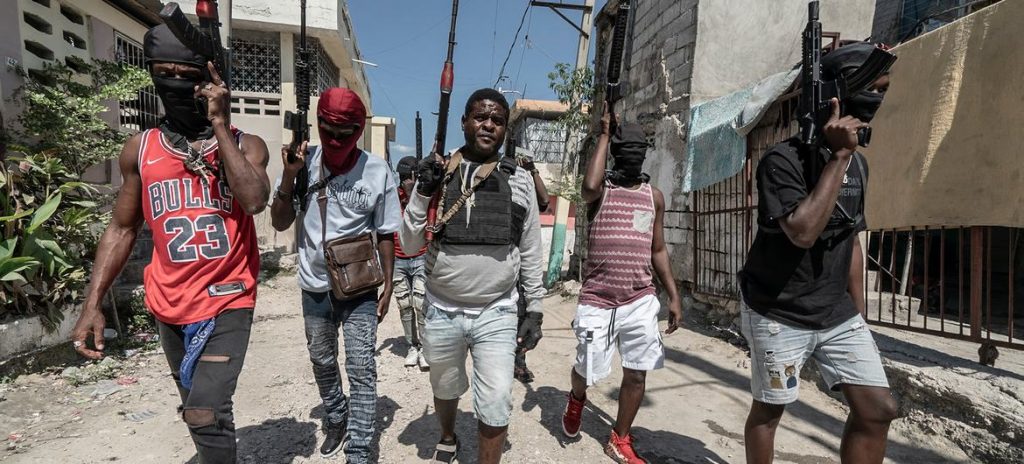
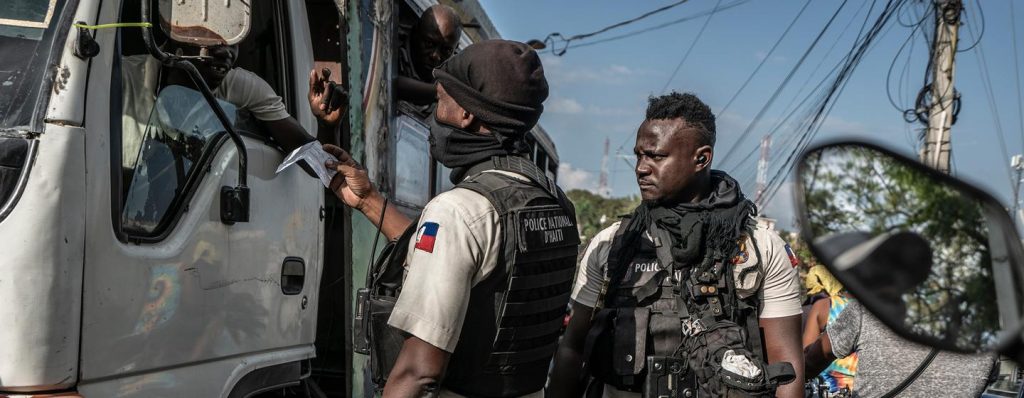
In a desperate attempt to stave off complete gang takeover of Port-au-Prince, the Interim Haitian Government has contracted with private foreign security forces. These well-armed, occasionally well-trained, and often reckless hired guns are supposed to support the Haitian National Police and Army. But it is unlikely they will be able to contain the gangs or save the government’s tenuous toe-hold on less than 10% of the capital. The foreign private security forces may actually exacerbate the problem.

The most recent addition to the private security providers is Erik Prince, founder of the notorious Blackwater Worldwide private military contracting company that massacred 17 civilians in Iraq in 2007. Blackwater was dissolved, but rebranded itself under a new company, Constellis, offering similar services.

According to the New York Times, Mr. Prince is sending 150 “mercenaries” to Haiti. The dollar amount for the contract is not known, but it is likely in the tens of millions in order to pay the mercenaries and their equipment for their stint in Port-au-Prince, as well as ensure a healthy profit for the company. One can only surmise, but the mercenaries may be earning as much as $100,000 for a year on the job.

Compare that to the roughly $200 per month or $2400 per year that the Haitian National Police officers are receiving to put themselves on the line and face death every day. The roughly 400 Haitian Army soldiers deployed in the capital and facing the same dangers receive even less pay. That huge disparity for essentially the same work can only have a demoralizing effect on the Police and Army.

Both Haitian security forces and foreign contract security forces are using drones in an effort to target gang leaders. So far, they have not been successful, but innocent civilians have been killed in the process. If the foreigners kill innocent Haitians through drone attacks (or firefights), gangs will almost certainly use the casualties as propaganda to frame their struggle as a national liberation from foreign invaders to gain popular support. In any case, there will be little accountability for the actions of the mercenaries.

Meanwhile, the gangs themselves have attempted to purchase their own drones, most recently through the Dominican Republic. The DR has long served as a pipeline for arms to gangs in Haiti despite DR government efforts to stem the trade. Should the gangs in Port-au-Prince actually obtain drones and deploy them against Haitian police, army and foreign mercenaries, it will be a game changer and further redefine the nature of modern armed conflict, as it has in other parts of the world.

Some private security firms, including Mr. Prince’s, have reportedly attempted to hire Haitian-American military veterans to go to Haiti as security contractors/mercenaries to enhance familiarity with Haitian language and culture. But many Haitians with military skills have resisted being drawn in because they don’t want to be linked with notorious foreign mercenaries who are not welcomed and largely unaware of fast moving developments in Haiti. If anyone understands what’s going on with the gangs in Port-au-Prince, it’s the Haitian National Police and Army who face off with them almost every day.

Regardless, the mercenaries, along with the Kenyan and Jamaican troops currently deployed, won’t be enough to defeat the gangs, especially if the gangs are able to employ attack drones against them. The gangs already possess powerful assault weapons that match what their opponents have.

The foreign private security companies will certainly make a lot of money from their mercenary services regardless of how the tide of the conflict swings. And, once again, Haiti will become a place for foreigners to generate cash off of Haiti’s misfortune.

What’s Next For Port-au-Prince?

As the gang alliance, Viv Ansanm, threatens the last remaining sections of Port-au-Prince still under government control, we need to ask: What will a complete takeover look like? From this Haiti observer’s perspective, we are likely to see criminal city-state emerge. What I have called a “gangocracy”—the rule by gangs. Here’s how it could go down.

—Gangs take over and destroy Digicel facility in Port-au-Prince. This disrupts communications for 3.7 million people. Natcom Mobile, the other major provider, might still function for 4 million people. But almost half the population would be affected. The sharply reduced service would not affect most gangs since they are connected with Starlink. 

—The remaining Interim Government of Haiti officials still in the city leave by helicopter and set up offices in Cap-Haitien, which has already become the de facto capital of Haiti. Indeed, government officials have been frequenting Cap-Haitien for months now (as well as cities in the south like Les Cay). Fortunately, the officials can use a helicopter operated by the Taiwanese that has been ferrying them back and forth from the capital. So everyone knows the route, even as shots are taken at the helicopter. 

—Morale of the National Haitian Police at various stations around Port-au-Prince will fall. They will question why they are the only ones left behind to fend for themselves. 

—As gangs tighten the noose around Port-au-Prince, they will lay siege to police stations and maybe attack them. The police may hold off for a while, but then, perhaps after a shoot-our, surrender with terms that could allow them to drive away freely and safely from the city with their families.    

—The Kenyan and other foreign troops will have no incentive to fight and leave after negotiating some deal for safe passage. A UN plane would be deployed to pick them up at the airport (opened for this short window) and fly them to the US or another Caribbean nation or even back to Kenya.

How Will Foreign Countries React?

The spectacle of complete gang dominance will be humiliating. People will be asking, how could a ragtag band of gangs (albeit well-armed) kick out police as well as professional soldiers (also well-armed)? There will be a lot of fretting among foreign government officials about what to do next. One option being discussed is having the Organization of American States (OAS) put together a foreign military mission to try to confront and dislodge the gangs from Port-au-Prince. The reason to go through OAS is to avoid calling for a vote in the UN for more forces, which would likely be vetoed by Russia and China. Plus, OAS is not set up for armed force deployment. So this to won’t materialize. 

In short, little appetite for another foreign intervention, which will leave the gangs in power.

Gangocracy Governance?

The international inaction will give the gangs a clear victory and put them in control of the capital. But the gangs have not put forth a plan for governing. In fact, it seems they have little interest in setting up a government. 

Rather, they would prefer to exert power and influence through intimidation, while also using the opportunity to amass more money and arms to remain in control. They will want everyone to know that they call the shots. In other words, it’s a giant ego trip. In fact, the leader the gang “5 Segon,” Johnson Andre, aka “Izo,” fancied himself as a rap star. He often posted video on TikTok until his account was shut down. Other gang leaders enjoy showing off their cash on TikTok. 

The lack of ambition beyond wealth and personal power could lead to an opulent lifestyle where gang leaders and their lieutenants take advantage of abandoned villas in and around Port-au-Prince. The gangs would likely play to the common people by branding themselves as the ones who defeated the foreign invaders and liberated the city. They might allow back some foreign medical teams to restart clinics and aid agencies to ship in food, as hunger is becoming acute with the prospect of famine. Down the road, gangs may even seek some recognition and legitimacy as a power to be reckoned with. But only if they can keep the loose alliance going.

Complete gang take-over also opens the door to narco-traffickers seeking to expand using a safe base. In that sense, control of the capital can further enhance the wealth of gang leaders and entrench their power. At that point, the city-state gangocracy will be complete and serve as an entity that defies the rules of diplomacy and the concept of the nation-state.

Of course, there is also the possibility that the alliance will collapse and the gangs fight among themselves over turf, especially if there is not common enemy. That would, of course, only deepen the suffering of the people left behind in Port-au-Prince. The disease and famine triggered by a war among the gangs could well be catastrophic with little relief from aid agencies.

Another Side of Haiti / Cap-Haitien

While Port-au-Prince is being swallowed up by gangs per the previous posting, Cap-Haitien in the north, as well as other towns well outside Port-au-Prince, are actually quite calm and relatively safe. It’s really a tale of two cities.

Many if not most UN agencies have moved their offices to Cap-Haitien from Port-au-Prince. Cargo ships are opting to call on this city instead of Port-au-Prince and Cap-Haitien also has the only international airport in Haiti since Port-au-Prince international airport has closed. (A smaller airport in Jeremy is also being opened to international air traffic for people living in the south so they don’t have to risk taking the dangerous road from Cap-Haitien.) Even Royal Caribbean cruise ships are calling on Labadee just outside Cap-Haitien. In fact, the city, the second largest in Haiti with well-over 500,000 people, is seeing a financial boost, especially in lodging and transportation.

Cap-Haitian’s big downside is overcrowding. The streets are packed with people who have fled Port-au-Prince. Some find relatives to stay with. Others must find shelter near the streets. And that large influx in turn has made the streets dirtier. Nonetheless, the city is thriving–in sharp contrast to Port-au-Prince. Indeed, as I have noted before, Cap-Haitien has been replacing Port-au-Prince as the hub for commerce.

The longer gangs stay in control of Port-au-Prince–and all indications are they will become even more entrenched–the more Cap-Haitien will continue be grow as the de-facto capital of Haiti. The remnants of a temporary central government will probably locate to Cap-Haitien to escape gang takeover of the capital. But it’s hard to believe they will have much if any authority in Okap.

And what a change! While Okap was the capital of Haiti for a brief time shortly after the successful revolution for independence that culminated in the final battle against the French outside Okap in November 1803, Port-au-Prince took over. In the ensuing decades, Port-au-Prince amassed virtually all power over the other cities and departments by centralizing all government functions.

If anything good is coming out of the power shift from Port-au-Prince back to the north due to gang control, it is that municipalities will be more free to collect taxes and take care of their own needs locally. Local authorities will call the shots and be far more efficient. And it is unlikely they will relinquish that new-found power to an appointed group that has now power to enforce its edicts. Of course, raising money is tough when the economy is weak, but at least the prospect of more control flowing downward to cities and towns from what remains of the central government could provide opportunities not possible before.

For now, Cap-Haitien is in the best position to carry out a de-centralized administration of Haiti. Officials from Cap-Haitien and other cities have already been in touch about how to govern themselves without Port-au-Prince. While some form of a central government will emerge and acquire some legitimacy, especially if fair and free elections can be held. In the meantime, it would behoove foreign governments seeking to aid Haiti to look more to Cap-Haitien. That city is poised to lead Haiti and perhaps even become the capital of Haiti once more.

Watch this space for updates!

Could Haiti Happen Here?

More specifically, could well-armed gangs defy the local police force of other Caribbean island nations, take control, and rule like capricious, violent mobsters, as they have in Port-au-Prince? And more broadly, does gang success in Haiti’s capital foreshadow what might come beyond the Caribbean region, even the U.S.? Sounds like a stretch at first glance. After all, gangs in Port-au-Prince have become entrenched because Haiti has few law enforcement resources to fight back effectively. Moreover, Haiti, forever tagged as “the poorest country in the Western Hemisphere,” is constantly going through cycles of extreme political instability. If only the alarming developments in Port-au-Prince could be dismissed with the sentiment “can’t happen here.”

But what we are seeing unfold in Port-au-Prince–85% gang control over a city of 3 million people that may well reach 100% by the time you read this post–shows just how effective modern gangs can be. Especially when the city has long been in the throes of social and political polarization, distrust of authority, and breakdown of government services, including police protection. Add in the fact that gangs have a special appeal to large segments of young men who have no jobs, see no future, and desperate for status, power and money. None of this, of course, can hide the reality of gang brutality nor the pain of deep widespread trauma from the daily exposure to death.

As readers of my posts know, I attribute this trend primarily to a concept I call the “Democratization of Destruction.” Essentially, this means smaller groups with limited resources can challenge existing authority through the availability of more and more lethal weapons. The ability of gangs to acquire military grade arms effectively levels the playing field for criminal elements, especially when combined with a disenfranchised segment of the population living in poverty with little hope.

In the past, revolts against the government or taking control of territory would usually manifest in a civil war with the rebels being supplied with arms by outside countries. The current trend differs because the power and opportunity for defiance and control has devolved down to gangsters with high powered assault rifles–financed through drug and human trafficking, extortion, ransom, and possibly corrupt elite business or political figures seeking to benefit. The most visual and alarming expression gang power came when bullets blew through commercial aircraft fuselages and closed down the Port-au-Prince airport. If there was any doubt, those acts showed who has the upper hand.

An island nation with a strong police force along with an army can fight back and keep the gangs in check, if not defeat them outright. But not all island nations have this capability. And that gives criminal entities (and non state groups) a potentially decisive advantage as police take on far greater risks and casualties in shootouts or even full-fledged battles against gangs. Countering gang power becomes even more problematic when the local population affected does not assist law enforcement officers out of fear or distrust. Moreover, as we have seen in Port-au-Prince, police need to confront gangs in their shantytown neighborhoods, thus giving them a defensive advantage. Gangs have recruited or forced children to be lookouts for police as part of an intelligence network to give them advance warning. And, if the police do make progress against the gangs, the gangsters can lay low, confident that no one in the hood will dare reveal their whereabouts.

All this gives gangs the confidence to consolidate gains and expand for money and for ego. None of this is really new in the historical context. Sections of cities in other Caribbean nations and even U.S. cities have at various times come under the control or influence of criminal elements with similar modus operandi. With today’s advanced weapons in the hands of gangs, rooting them out becomes far more problematic.

Two weeks ago in Port-au-Prince, police tried to using drones in an attempt to kill gang leader Jimmy Cherizier, aka Barbecue, to regain the upper hand. But, while the police may have killed some of his gang lieutenants, they failed to take out the boss (despite initial claims of doing so). Apparently, the police did not have the intelligence to properly locate and identify him.

In response, Cherizier bragged about his survival in a broadcast and threatened to acquire his own drones to attack the police–thus using the same cutting edge arial weapons employed against him. Should that happen–a strong possibility–the level and sophistication of fighting will sharply escalate. Police will be at greater risk from gang drones than the gangs, because gangs know exactly where to find the police headquarters, depots, and vehicles. And gang drone strikes need not be limited to police. Police controlled districts and neighborhoods will be at risk as well, especially from Kamikaze type drone attacks almost impossible to detect or defend against.

Things are never static in gang vs government warfare. Gangs in Port-au-Prince are not just consolidating their power with weapons, but evolving to implement crude measures of governance, including safety of people under their control and access to food and medicine. At the same time, the gangs in Port-au-Prince have formed a loose alliance known as Viv Ansanm or “Live Together,” indicating a degree of political savvy and ability to move beyond gang-on-gang internal battles for turf dominance. Viv Ansanm has even begun recasting the image of gangs as a movement that stands for the “people” and Haitian nationalism against “foreign” influence. All in an attempt to gain some legitimacy and ultimately political recognition.

Bottom line: We should anticipate that Port-au-Prince gangs may well serve as a model for gangs in other Caribbean island nations and beyond. At the same time, we need to remember that the rest of Haiti outside the Port-au-Prince area is relatively safe. Gang power has its limits, even in Haiti. Next posting to detail gang tactics, expanding clout, and what can be done.

Painting by Malik Senefru

More Space X Debris Rains Down

So, Turks & Caicos just had the experience of watching back-to-back Space X explosions 51 days apart sending down thousands of pieces of debris. Spectacular viewing, like watching fireworks, except for the potentially deadly fall out. And this was after the FAA suspended further Space X flights until the agency did a mishap investigation.

The FAA claimed to have identified the anomaly of the first flight that launched on January 16 and that corrective measures had been taken. The specific cause was not stated. The FAA also announced that stringent safety criteria had been applied to future launches to minimize risk to public safety. Clearly, something is not right and the danger to Caribbean people living under the launch trajectory continues to be real.

This time most of the debris rained down on the southern Bahama Islands, apparently not quite reaching the Turks & Caicos, thought the debris falling was quite visible. Airports in the region, including Miami, had to close until the skies were safe for flying. All of this again prompts the question, “Why must these islands continue to bear the risk of injury and death for a commercial experimental venture that they don’t benefit from?”

Space X is not ready for any more flights. Done! And if they want to continue, launch somewhere outside the Caribbean. Does anyone think Americans would be OK if Space X launched in a northerly direction over the US and then blew up over people below? The irony of Elon exploding rockets and exploding government services with debris all over the place is not lost on anyone.

Picture above taken looking west from north coast of Provo. Popular bar and grill, Da Conch Shack, lit up to the right of the photo.

Rocket Debris Raining on TCI

On Thursday evening January 16 at 5:40 pm, I looked up at the pale twilight sky after the sun set but before darkness brought out the stars. A friend who tracks rocket launches from the US had told me to go out and look for a rocket that would be passing overhead. I had seen these before–a blurb in the sky trailed by a bright orange flare, almost like a comet but not as long. But on this evening I didn’t see anything. My friend said to be patient.

Suddenly, scores of bright stars followed by wavy white, yellow and orange streaks appeared over the horizon and filled the sky. I tapped the video button on my iPhone and pointed it overhead to track what at first looked like a massive fireworks display. I was too much in the zone and the moment to figure out what was happening. Only after the streaks passed over did it dawn on me that this must have been the rocket and that something had gone terribly wrong.

Terribly wrong indeed! The SpaceX rocket launched out of its South Texas Site had in fact blown up, and I was watching the burning debris fall back down to earth. It was at first a thrill to see, as it was for others who had witnessed this phenomenal explosion. But the excitement quickly turned to deep concern about the debris striking anyone or causing any damage.

Amazingly, no one was hit in Turks & Caicos. Surprising, because people found lots of rocket pieces all over the islands of Provo and South Caicos, especially on the beaches and in the sea. Reports of fallen debris came from Haiti, 130 miles to the south, as well. It didn’t take long for the Turks & Caicos government to call on the UK aviation authorities to find out what was going on from the FAA, which is the regulator of US airspace that recently included launches into space. The FAA quickly suspended Space X flights until an investigation is completed. It should be pointed out that, as the falling debris was spreading through the atmosphere, several airline flights were diverted from the zone of danger. And that included an Iberian Airways flight from Madrid crossing the Atlantic that had to call a May Day emergency landing in San Juan, Puerto Rico because it was running low on fuel. One can only imagine the disaster had a plane been hit and killing two or three hundred people.

So, what are to make of all this? Specifically, what right does SpaceX have to put our islands and this part of the Caribbean region at risk? These rockets are experimental and always stand a chance of blowing up in the sky or at the SpaceX launch site near the city of Brownsville and the border with Mexico. And when the rockets do explode, as they did on the early evening of January 16, the toxic fallout is immediately apparent– polluting a fragile environment and potentially injuring or killing people in the air or on the ground. Clearly, the launches in this direction need to be stopped.

Future postings will delve into the dangers posed by this rocket company that happens to be owned (50%) by the world’s richest man, Elon Musk. Unlike the rest of us here, he stands to benefit tremendously at our expense. Supporters of SpaceX rocket launches blather about balancing the grandiose quest (and ego trip) of space exploration with necessary risks. Which is another way of saying the collateral damage of you people in the way matters little. I beg to differ and challenge the entire premise.

« Older posts

© 2025 Ben Stubenberg

Theme by Anders NorenUp ↑